September 9, 2009

Libraries and Innovation Journalists

One of the points I tried to empha­size in my talk about libraries and civic engage­ment (PDF) at last month’s Allen County Pub­lic Library’s Library Camp is that this isn’t a new role for us. The easy, sound­bite way to explain this is to note that at the turn of the pre­vi­ous cen­tury, one of our major roles was to help immi­grants assim­i­late into Amer­i­can soci­ety and learn how to be U.S. cit­i­zens. At the turn of the cur­rent cen­tury, there’s a sim­i­lar need for us to do the same thing for dig­i­tal immi­grants, in no small part because there really isn’t any­one else to help those folks who are past high school age.
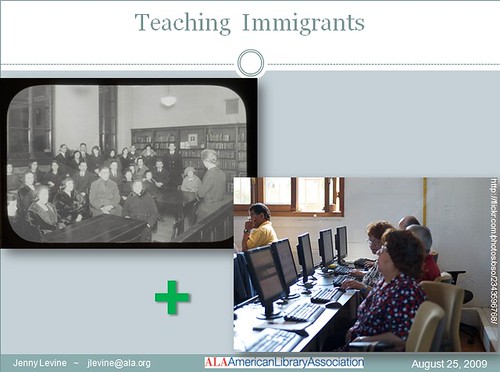
libraries teaching immigrants

I’ve been grav­i­tat­ing towards this topic lately because I see so much poten­tial, for both libraries and soci­ety, and the fol­low­ing idea makes total sense to me.

From the 2020 Fore­cast: Cre­at­ing the Future of Learn­ing site, New Civic Lit­era­cies:

David Nord­fors, who runs the inno­va­tion jour­nal­ism pro­gram at Stan­ford, stays stu­dens are mov­ing towards a jour­nal­isatic method of learn­ing — find­ing knowl­edge, ass­esing it, and then con­nect­ing the dots to build a story.”

Sadly, like the 2006 MacArthur report about par­tic­i­pa­tory cul­ture, the 2020 effort includes libraries in that future only as after­thoughts, no more than poten­tial sup­port resources, rather than cen­tral, dri­ving fig­ures. While I applaud efforts like MacArthur’s dig­i­tal learn­ing in edu­ca­tion ini­tia­tive and the 2020 Fore­cast, I remain con­vinced that as a soci­ety, we’ll have a much greater impact on civic life for a greater range of peo­ple by focus­ing on libraries as the pri­mary change agent, not schools.

We’re already well-positioned in our com­mu­ni­ties to be the con­ven­ers for this type of activ­ity, we have a library ecosys­tem for life­long learn­ing that includes adults (not just K-12 stu­dents), we have sup­port­ing resources (not just tech­nol­ogy, but con­text), we teach how to nav­i­gate infor­ma­tion, and we’re the last, safe, non-commercial space that’s open to any­one with­out any bar­ri­ers. In fact, quite a few sec­tions of the 2020 site scream “libraries” to me, and I encour­age you to read through the var­i­ous sections.

So while I’m intrigued by and fully sup­port the idea of schools encour­ag­ing “inno­va­tion jour­nal­ists,” those pro­grams won’t reach their full poten­tial — nor will the stu­dents — with­out libraries to sup­port them. And when those stu­dents get out into the real world, libraries can facil­i­tate their non-school efforts. And we can bring them together with the rest of the com­mu­nity to put those new civic lit­era­cies into prac­tice for everyone.

And don’t get me started on the par­tic­i­pa­tory divide.…


5:57 am Comments (2)

July 12, 2009

Innovation at DOK

Shanachies Erik, Jaap, and Geert talk about the DOK Library

Jaap is the “head of inno­va­tion” at DOK — love that title

DOK = Library Con­cept Center

video of library man­ager Eppo tour­ing DOK
– showed Blue­tooth down­load sta­tion
– music pods
– video games (“The library can’t be with­out games.”)

it’s all about peo­ple — share the sto­ries to tell and make the stories

DOK sits on one side of “cul­ture square” — they named it that because they’re across from a movie and the­ater
there’s a lot of color in DOK because they believe this is impor­tant to lift peo­ple up, help moti­vate them to share their sto­ries
the staff offices on the top floor are totally open — not just open source, but open access to staff :)
have a “read­ing café” with the mag­a­zines
they put the timely read­ing mate­ri­als right near the food and coffee/café
the build­ing is a con­verted super­mar­ket — it’s con­crete but made attractive

the book­shelves don’t have a top shelf, so they seem more open
not col­lect­ing dust
shelf along the bot­tom to dis­play the books but can also use it to step up and reach the top shelf
Geert does the sig­nage — it’s attrac­tive and uses every­day lan­guage
the library has a very lux­u­ri­ous look but the book­cases are made of NDF (?)
spend the money on ser­vices, rather than book­cases
the children’s col­lec­tion is on book­shelves that are on wheels, so mov­able; allows them to move the col­lec­tion for pro­gram­ming
all of the children’s book­shelves are green so easy to iden­tify
the kids can stand on the book­shelves and it’s okay
one sign in the adult col­lec­tion uses an image from Psy­cho :-p

their elec­tronic sig­nage runs on Nin­tendo Wiis because it’s cheap! :)
cost about a quar­ter of the price, plus can use the Wiis for game tournaments

the floor has a rub­ber tex­ture so playful

an area where peo­ple can learn lan­guages
it’s a quiet area and an open study room

snoic chairs (music pods)
an enrich­ing expe­ri­ence that goes beyond just lend­ing out CDs
can sit in the chairs and lis­ten to music that only you hear
the touch­screens are hooked up to the library’s net­work, so can watch movies

the “romance room” is com­pletely red
kids like to come study in this room and use the library’s wifi

they dim the lights to make peo­ple look bet­ter (rather than harsh, bright lights)

peo­ple can take food and drink from the café any­where in the building

offer an art col­lec­tion for check­out, with paint­ings out for dis­play
have a cat­a­log online where res­i­dents can reserve paintings

projects they’re work­ing on now:
started a new “sci­ence and inno­va­tion” depart­ment to look at dif­fer­ent ways to bring peo­ple together around data

1. hacked a Microsoft Sur­face table
worked with Tech­ni­cal Uni­ver­sity in Delft
devel­oped two appli­ca­tions for it, one of which is fin­ished
sec­ond one, still work­ing on, will be a news quiz — users will work together using the table
brings peo­ple together around top­ics of interest

first appli­ca­tion uses spe­cial bar­codes on the library card
put your card on the table and it reads your address, shows you his­tor­i­cal images for your address
totally freak­ing cool video of how this works, nar­rated by the stu­dent who devel­oped the software

can also use a map appli­ca­tion to find images from any street
also includes video
can sort images

because the table can detect objects, it can detect shapes, so there’s a ring you can place on top that acts as a magnifier

2. DOK Agora “Sto­ry­board of your life“
works with mate­r­ial from the Delft Archive
idea is to get peo­ple to share their sto­ries
a col­lec­tion of sto­ry­telling tools for peo­ple vis­it­ing the library
let you see, hear, and watch other peo­ples’ sto­ries, as well as tell your own
includes maps, paint­ings, etc.
the library is a col­lec­tion of sto­ries and cul­ture — how can we get the community’s sto­ries into the library?

huge screen with small sto­ries on it that you can make larger
national archive, local archive
they pick a story, scan their library pass, the story is linked to it, go down one level to the sto­ry­telling area
this is where any­one in the com­mu­nity can add a pic­ture, audio, video, etc. to the archive
when the archive has grown, they have a launch party for it (for spe­cific topics)


4:14 pm Comments (8)