September 15, 2009

How Librarians Helped Get Out the Vote… in 1952

I love serendip­ity. While I was prepar­ing for my ACPL Library Camp pre­sen­ta­tion about libraries and civic engage­ment, I saw a post on the Civic Engage­ment blog in which Nancy Kranich pointed to a fas­ci­nat­ing arti­cle on the topic.

Pro­mot­ing Cit­i­zen­ship: How Librar­i­ans Helped Get Out the Vote in the 1952 Pres­i­den­tial Elec­tion,” Libraries & the Cul­tural Record 43 no1 1–28 2008 (Unfor­tu­nately, it doesn’t appear to be online in its entirety, but you can get the full text through Gale’s Aca­d­e­mic OneFile.)

I think this fas­ci­nat­ing arti­cle pin­points the moment in time when libraries became known for pro­vid­ing high-quality, accu­rate, authen­tic infor­ma­tion about all sides of an issue. Its cer­tainly the point at which libraries became out­lets for infor­ma­tion about vot­ing. In a fas­ci­nat­ing look back, author Jean Preers chron­i­cles the efforts made to civi­cally engage Amer­i­cans and increase voter turnout in the 1948 and 1952 elections.

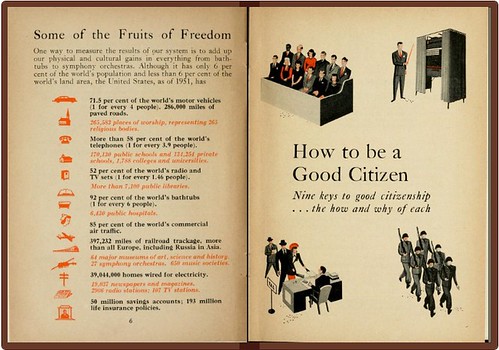
It starts with an ini­tia­tive by the Amer­i­can Her­itage Foun­da­tion in 1947, which results in the book­let Good Cit­i­zen: The Rights and Duties of an Amer­i­can, a con­fer­ence, and the Free­dom Train, an actual train that trav­eled across the coun­try exhibit­ing “orig­i­nal doc­u­ments that that estab­lished the nation’s demo­c­ra­tic tra­di­tion, from the Bill of Rights to the Eman­ci­pa­tion Procla­ma­tion.” The book­let is a won­der­ful arti­fact — I highly rec­om­mend it as a his­tor­i­cal snap­shot, and thank­fully it’s avail­able on the Inter­net Archive, thanks to the Uni­ver­sity of Florida’s George A. Smath­ers Libraries.

Good Citizen: The Rights and Duties of an American

Dur­ing this time, the Amer­i­can Library Asso­ci­a­tion (dis­claimer: my employer, although I wasn’t even born back then) “under­took its own pro­gram to pro­mote the dis­cus­sion of cur­rent issues in pub­lic libraries. This was a direc­tion long-favored by its Exec­u­tive Direc­tor Carl Milam, and, as part of its “Four Year Goals” in 1948, ALA had ini­ti­ated a pro­gram called Great Issues, which urged librar­i­ans to high­light such top­ics as U.S.-Russian rela­tions, civil rights, and world gov­ern­ment in their col­lec­tions and programs.”

Librar­i­ans started cre­at­ing bib­li­ogra­phies for these top­ics and encour­aged com­mu­nity orga­ni­za­tions to form read­ing and dis­cus­sion groups around them.

Ruth Ret­zen, chair of ALA’s Adult Edu­ca­tion Board, saw this as an oppor­tu­nity for libraries to take the lead in their com­mu­ni­ties, direct­ing their pro­grams towards wider cir­cu­la­tion of per­ti­nent infor­ma­tion: ‘Let us make our libraries active com­mu­nity cen­ters for the spread of reli­able infor­ma­tion on all sides of this vital issue and for the encour­age­ment of free dis­cus­sion and action.’ ”

Unfor­tu­nately, none of these efforts really suc­ceeded, and voter turnout for the 1948 elec­tion was “sur­pris­ingly low.” To cel­e­brate its 75th anniver­sary in 1951, ALA changed direc­tion and used a $150,000 grant from the Ford Foun­da­tion to help libraries imple­ment read­ing and dis­cus­sion groups them­selves. [Iron­i­cally, “this nation­wide adult edu­ca­tion pro­gram began in the fall of 1951 just as National Library Day obser­vance in Phli­adel­phia on Octo­ber 4 effec­tively con­cluded the seventy-fifth anniver­sary cel­e­bra­tion.” All Philadel­phia libraries are cur­rently set to close on Octo­ber 2, 2009, unless the Penn­syl­va­nia Leg­is­la­ture acts to save them.]

As ALA began to ramp up its pro­gram, the AHF con­tin­ued to work on increas­ing voter turnout for the 1952 elec­tion. The folks behind the AHF pro­gram real­ized that guilt­ing peo­ple into vot­ing wasn’t work­ing (and wasn’t likely to start work­ing any­time soon), so they also changed direc­tion to sim­ply “pro­vide ade­quate infor­ma­tion and mate­ri­als to imple­ment the will of the peo­ple.” An enhanced focus on civic and non­profit orga­ni­za­tions brought ALA and libraries into the effort as the cen­tral source cit­i­zens could go to in order to find unbi­ased infor­ma­tion. ALA agreed, in part because this meant the AHF and other orga­ni­za­tions would pro­mote this new role and encour­age their mem­bers to seek out libraries specif­i­cally for unbi­ased infor­ma­tion that could then be used to reg­is­ter local vot­ers. Accord­ing to Preers, this is also when libraries take on the man­tle of library adult edu­ca­tion, another new role.

It truly is a thought-provoking arti­cle (there’s a lot more to it, so you really should read the whole thing), and it high­lights one of the themes that’s res­onated with me per­son­ally dur­ing the last 12–18 months, that when we talk about how the library “used to be,” we have to be very spe­cific about which era we’re refer­ring to. As I’ve noted in the past about gam­ing, children’s ser­vices are a rel­a­tively recent addi­tion to libraries, as are fic­tion, mul­ti­me­dia, and even pub­lic access (see my brief post about D. W. Krummel’s The Seven Stages of Librar­i­an­ship for more about this).

More impor­tantly, it helps show how proac­tive civic engage­ment is not a new role for 21st cen­tury libraries. We’ve done this before — suc­cess­fully — and we can do it again — suc­cess­fully — if we focus on spe­cific areas. For exam­ple, stud­ies show that gam­ing in libraries could include civic engage­ment expe­ri­ences. I’m also inter­ested in the “Great Issues” pro­gram to offer the library as a por­tal to civic dis­course around many of the “great” issues that aren’t eas­ily acces­si­ble to the aver­age per­son. Pri­vacy, dig­i­tal iden­tity, online rep­u­ta­tion, media lit­era­cies, trans­par­ent gov­ern­ment… there’s a wide range of top­ics that need addressing.

The ques­tion is can librar­i­ans (and not just pub­lic librar­i­ans) still pro­vide this type of ser­vice? I ques­tion if there’s any­one else who can.

Tags: ala, american heritage foundation, american library association, civic engagement, elections, libraries, voting

8:29 am Comments (3)

September 9, 2009

Libraries and Innovation Journalists

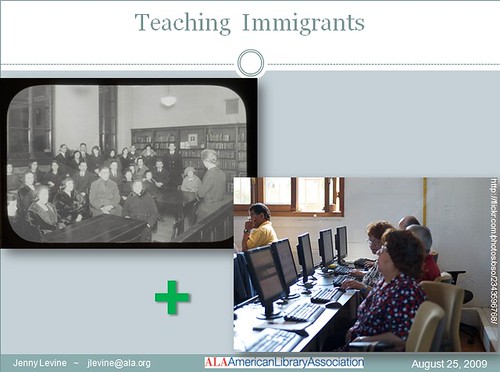
One of the points I tried to empha­size in my talk about libraries and civic engage­ment (PDF) at last month’s Allen County Pub­lic Library’s Library Camp is that this isn’t a new role for us. The easy, sound­bite way to explain this is to note that at the turn of the pre­vi­ous cen­tury, one of our major roles was to help immi­grants assim­i­late into Amer­i­can soci­ety and learn how to be U.S. cit­i­zens. At the turn of the cur­rent cen­tury, there’s a sim­i­lar need for us to do the same thing for dig­i­tal immi­grants, in no small part because there really isn’t any­one else to help those folks who are past high school age.

libraries teaching immigrants

I’ve been grav­i­tat­ing towards this topic lately because I see so much poten­tial, for both libraries and soci­ety, and the fol­low­ing idea makes total sense to me.

From the 2020 Fore­cast: Cre­at­ing the Future of Learn­ing site, New Civic Lit­era­cies:

David Nord­fors, who runs the inno­va­tion jour­nal­ism pro­gram at Stan­ford, stays stu­dens are mov­ing towards a jour­nal­isatic method of learn­ing — find­ing knowl­edge, ass­esing it, and then con­nect­ing the dots to build a story.”

Sadly, like the 2006 MacArthur report about par­tic­i­pa­tory cul­ture, the 2020 effort includes libraries in that future only as after­thoughts, no more than poten­tial sup­port resources, rather than cen­tral, dri­ving fig­ures. While I applaud efforts like MacArthur’s dig­i­tal learn­ing in edu­ca­tion ini­tia­tive and the 2020 Fore­cast, I remain con­vinced that as a soci­ety, we’ll have a much greater impact on civic life for a greater range of peo­ple by focus­ing on libraries as the pri­mary change agent, not schools.

We’re already well-positioned in our com­mu­ni­ties to be the con­ven­ers for this type of activ­ity, we have a library ecosys­tem for life­long learn­ing that includes adults (not just K-12 stu­dents), we have sup­port­ing resources (not just tech­nol­ogy, but con­text), we teach how to nav­i­gate infor­ma­tion, and we’re the last, safe, non-commercial space that’s open to any­one with­out any bar­ri­ers. In fact, quite a few sec­tions of the 2020 site scream “libraries” to me, and I encour­age you to read through the var­i­ous sections.

So while I’m intrigued by and fully sup­port the idea of schools encour­ag­ing “inno­va­tion jour­nal­ists,” those pro­grams won’t reach their full poten­tial — nor will the stu­dents — with­out libraries to sup­port them. And when those stu­dents get out into the real world, libraries can facil­i­tate their non-school efforts. And we can bring them together with the rest of the com­mu­nity to put those new civic lit­era­cies into prac­tice for everyone.

And don’t get me started on the par­tic­i­pa­tory divide.…

Tags: civic engagement, civic interests, civic literacies, education, future, innovation, journalism, learning, libraries

5:57 am Comments (2)

September 24, 2008

Gaming Is Not Bowling Alone

Back in May, I was invited to give a pre­sen­ta­tion to a group at the MacArthur Foun­da­tion about four oppor­tu­ni­ties for libraries. The fourth oppor­tu­nity I dis­cussed was gam­ing, high­light­ing the social inter­ac­tions that we’re see­ing hap­pen in libraries and explain­ing how they pro­vide a unique con­text for this type of activ­ity. I noticed they had bemused smiles on their faces as I fin­ished but didn’t real­ize why until they told me they’d just fin­ished con­duct­ing a study with the Pew Inter­net folks and that the pre­lim­i­nary data sup­ported my claims that videogames have become a very social activ­ity for kids today. They were still pro­cess­ing the data so they couldn’t share specifics with me, but they promised every­thing would be avail­able in a few months.

Luck­ily, that report, Teens, Video Games, and Civics, finally came out last week as a PDF you can down­load for free. The sub­head­ing on the main page gives you a gen­eral idea of what they found: “teens’ gam­ing expe­ri­ences are diverse and include sig­nif­i­cant social inter­ac­tion and civic engage­ment.” Gama­su­tra has a great sum­mary of the report , so I’m just going to high­light a cou­ple of the sta­tis­tics I found most interesting.

  • 97% of teens ages 12–17 play com­puter, web, portable, or con­sole games. 99% of boys and 94% of girls play video games…. Under­stand­ing the nature of game play is vital to under­stand­ing how nearly every Amer­i­can teen spends at least part of many of their days.“
    This is a great sum­mary of why librar­i­ans need to under­stand gam­ing and offer pro­gram­ming around it.
     
  • The 5 most pop­u­lar games played by Amer­i­can teens are Gui­tar Hero, Halo 3, Mad­den NFL, Soli­taire, and Dance Dance Rev­o­lu­tion…. The range of gen­res spanned by the most pop­u­lar games played by teens indi­cates they are not sim­ply play­ing vio­lent first per­son shoot­ers or action games…. The two most widely played game gen­res were rac­ing and puz­zle games, played by nearly three-quarters of teens in the sample.”

I could go on and on, and I was going to in this post, until I read the accom­pa­ny­ing report, The Civic Poten­tial of Video Games (PDF), from the Civic Engage­ment Research Group at Mills Col­lege. In fact, this sec­ond report lit­er­ally *screamed* “LIBRARIES” as I was read­ing it, and I’ve writ­ten that word in many places in the mar­gins. While the first report has the great sta­tis­tics, the sec­ond one delves deeper into those num­bers and takes some guesses at what it all means. It actu­ally makes a very strong case for gam­ing in libraries, even though it doesn’t men­tion us at all any­where in the text. Some high­lights from the Mills Col­lege report, along with some commentary.

  • Although pub­lic debates often frame video games as either good or bad, research is mak­ing it clear that when it comes to the effects of video games it often depends. Con­text and con­tent mat­ter.
    This is where libraries come in — we pro­vide con­text and con­tent, because tra­di­tion­ally these are two of our great­est strengths. We do this in so many of our exist­ing ser­vices — ref­er­ence, lit­er­acy, recre­ational read­ing, etc. — and we can do this for gam­ing, too.
     
  • Fur­ther­more, inter­ac­tions in video games can model [John] Dewey’s con­cep­tion of demo­c­ra­tic com­mu­nity — places where diverse groups of indi­vid­u­als with shared inter­ests join together, where groups must nego­ti­ate norms, where novices are men­tored by more expe­ri­enced com­mu­nity mem­bers, where team­work enables all to ben­e­fit from the dif­fer­ent skills of group mem­bers, and where col­lec­tive prob­lem solv­ing leads to col­lec­tive intel­li­gence.
     
  • Civic par­tic­i­pa­tion requires that young peo­ple develop con­fi­dence in their own abil­i­ties (some­times referred to as a sense of agency) to act as lead­ers and to work pro­duc­tively for change. To the extent that youth have the oppor­tu­nity to prac­tice artic­u­lat­ing their own point of view, debate issues, and help oth­ers in their own com­mu­ni­ties, they are likely to develop con­fi­dence in their abil­ity to do so in the larger civic and polit­i­cal are­nas. Finally, civic and polit­i­cal activ­ity is largely a group activ­ity. Youth orga­ni­za­tional mem­ber­ship is believed to social­ize young peo­ple to value and pur­sue social ties while expos­ing youth to orga­ni­za­tional norms and rel­e­vant polit­i­cal and social skills that make main­tain­ing those ties more likely.
    Com­bined with the Thinker­ing Spaces model, offer­ing more of these oppor­tu­ni­ties is one of the most pow­er­ful visions of the future of the pub­lic library for me, and it cer­tainly cre­ates the “trans­for­ma­tional expe­ri­ence” referred to in the OCLC report that they believe causes tax­pay­ers to vote yes in sup­port of libraries.
     
  • These results sug­gest that the fre­quent con­cerns in the media and else­where about the ennui and dis­con­nec­tion among those who play video games for long peri­ods of time may be mis­placed…. Teens who play games socially (a major­ity of teens) are more likely to be civi­cally and polit­i­cally engaged than teens who play games pri­mar­ily alone. Inter­est­ingly, this rela­tion­ship only holds when teens play along­side oth­ers in the same room.
     
  • Among teens who write or con­tribute to web­sites or dis­cus­sion boards related to the games they play, 74% are com­mit­ted to civic par­tic­i­pa­tion com­pared with 61% of those who play games but do not con­tribute to these online gam­ing com­mu­ni­ties. They are also more likely to raise money for char­ity, stay informed about polit­i­cal events, express inter­est in pol­i­tics, try to per­suade oth­ers to vote in a cer­tain way, and attend protests or demon­stra­tions.
    What this says to me is that the com­bi­na­tion of teens in a social gam­ing space, men­tored by infor­ma­tion guides (librar­i­ans) who pro­vide scaf­fold­ing for a pos­i­tive civic expe­ri­ence, com­bined with the avail­abil­ity of free inter­net access, is a con­struc­tive gam­ing expe­ri­ence for pro­mot­ing civic engage­ment in today’s youth. Pub­lic libraries are uniquely qual­i­fied to pro­vide that expe­ri­ence, and it’s almost “low-hanging fruit” for us, as we have fewer bar­ri­ers to that expe­ri­ence than schools do.
     
  • Approx­i­mately one-half of teens, for exam­ple, have played games that led them to think about moral or eth­i­cal issues. How­ever, rel­a­tively few teens (typ­i­cally under ten per­cent) report ‘often’ hav­ing par­tic­u­lar civic gam­ing expe­ri­ences.
    Real­is­ti­cally, it will be years before civic gam­ing expe­ri­ences are fully inte­grated into the class­room, a process stunted by No Child Left Behind because it de-emphasizes civics and social stud­ies. This is yet another dig­i­tal divide libraries can help bridge by pro­vid­ing the types of civic expe­ri­ences gam­ing in a social con­text pro­motes.
     
  • Most of the group-gamers (49%) play with friends in per­son, with 77 per­cent of group-gamers report­ing play­ing games with oth­ers in the same room…. Over­all, 76 per­cent of youth play games with oth­ers at least some of the time.
    So if there are ben­e­fits to play­ing games together, is it bet­ter for kids to play with a small cir­cle of friends at home or to bring them together with a diverse group of peers from their com­mu­nity, sur­rounded by the knowl­edge of the world, with infor­ma­tion guides stand­ing at the ready to help them?
     
  • Civic edu­ca­tion research leads us to sus­pect that par­ents, peers, teach­ers, and men­tors can sig­nif­i­cantly increase the impact of civic gam­ing expe­ri­ences by help­ing ado­les­cents reflect on those expe­ri­ences.
    Note that the Pew gam­ing report doesn’t even men­tion the word “libraries” any­where in it. Seri­ously. How can that be? In addi­tion, MacArthur reports con­stantly refer to after­school pro­grams but don’t spec­ify libraries. If we want to sit at the table of this dis­cus­sion, we need to assert our unique posi­tion to address the issues these reports raise.
     
  • Civic and polit­i­cal par­tic­i­pa­tion among youth is quite unequal. The vot­ing rate of 18–29-year-olds who had attended col­lege was fully three times greater than the vot­ing rates of 18–29-year-olds who had not…. By equal­iz­ing civic learn­ing oppor­tu­ni­ties, we may be able to help to equal­ize civic and polit­i­cal par­tic­i­pa­tion — a fun­da­men­tally impor­tant goal in a democ­racy…. Civic gam­ing expe­ri­ences may be a means of more equi­tably devel­op­ing teens’ civic skills and com­mit­ments…. Increas­ing the fre­quency of such expe­ri­ences is likely nec­es­sary to effec­tively tap the civic poten­tial of video games.
    Again, I don’t see schools being able to increase the fre­quency of such expe­ri­ences across the board in the cur­rent envi­ron­ment. Libraries, on the other hand, are well-suited for this.
     
  • Both within games and in their offline lives, it is clearly impor­tant that youth have space to develop their own ways of engag­ing civi­cally and, along with such oppor­tu­ni­ties, that they receive guid­ance and sup­port from those with more civic and polit­i­cal expe­ri­ence.
    See what I mean about how this report has “libraries” stamped all over it? One of the things we need to con­sider is how we can cre­ate opti­mal spaces and expe­ri­ences to encour­age these types of inter­ac­tions, because we pro­vide a unique set of con­di­tions that the struc­tured, time-limits of the school day just can’t provide.

So in addi­tion to the diverse range of social inter­ac­tions that take place around gam­ing in libraries, the rela­tion­ships it helps build between librar­i­ans and users, the lit­era­cies kids inher­ently learn play­ing many videogames, and the draw to the library so kids learn more about the ser­vices we have to offer them, we can now add civic engage­ment to the list of ben­e­fits. The ROI on offer­ing gam­ing just keeps get­ting bet­ter and better.

If all of this feels for­eign to you, it may be that you’re not a gamer or you don’t inter­act with kids who are gamers, because anec­do­tally, I hear what these num­bers say all the time from librar­i­ans offer­ing gam­ing. I hear it most loudly from Eli Neiburger at the Ann Arbor Dis­trict Library, some­one who has fos­tered an online and phys­i­cal com­mu­nity of kids who are pas­sion­ate about the Library because of its gam­ing pro­gram­ming. In his book Gamers…in the Library??, he talks about how you can level up the dis­course by engag­ing kids around con­tent they care about. In fact, back in May, he pre­sciently sub­mit­ted a pro­posal to talk about civic engage­ment at GLLS2008 (which he’ll be giv­ing on Novem­ber 3). In addi­tion, I’m happy to say that Amanda Lenhart, Senior Research Spe­cial­ist at Pew/Internet and the lead on the gam­ing and civics report, will be pre­sent­ing a ssion on this data at the gam­ing sym­po­sium, so this is going to be a hot topic.

If you haven’t wit­nessed this type of behav­ior in per­son, I encour­age you to attend a library gam­ing event and/or talk to librar­i­ans offer­ing this ser­vice your­self. I hear the com­ments week in and week out, usu­ally unprompted, but don’t take my word for it. Obvi­ously I feel pretty strongly that there’s a big role here for libraries to play if we just rec­og­nize and grab it, but you should learn more so that you can decide if gam­ing is right for your library. There’s also a lot more in both of these reports, includ­ing infor­ma­tion about parental education/ involve­ment and impli­ca­tions for school libraries, so I highly rec­om­mend them as food for thought.

Tags: civic engagement, gaming in libraries, macarthur foundation, pew internet

8:14 am Comments (9)